
A deep clean can feel overwhelming when you look at the whole house at once. Broken down room by room, it becomes a clear, manageable project, and the results last far longer than a quick tidy-up.
This guide shows you how to deep clean your house step by step: what to prepare, the order that saves time, and the techniques that work in each room. If you’re still deciding whether your home needs a deep clean or a regular one, start with our guide on what deep house cleaning is.
Before you start: plan, supplies and the golden rules
Set aside the time. A full deep clean of an average home can take a full day or more for one person. Splitting it over a weekend, or one room per evening, keeps it realistic.
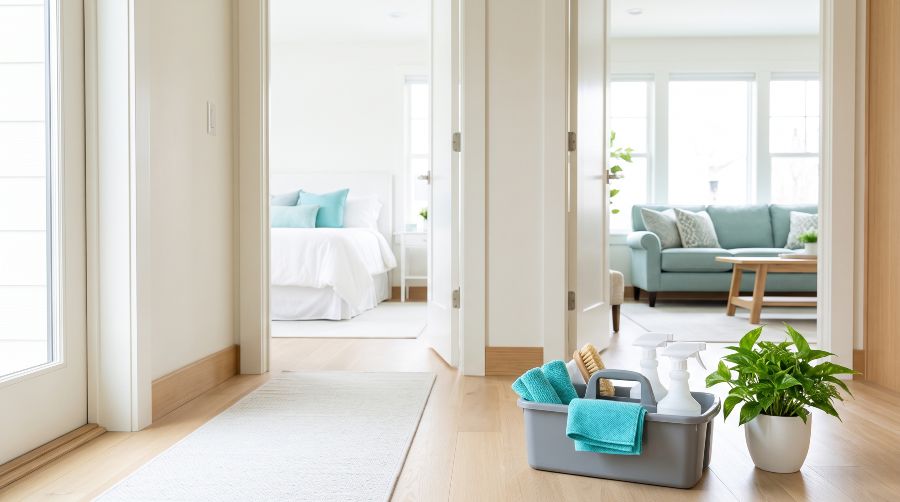
Gather your supplies first. You’ll save a lot of back-and-forth if everything is in one caddy:
- Microfiber cloths (several, color-coded for kitchen and bathroom)
- All-purpose cleaner, glass cleaner and a degreaser
- Bathroom descaler or a vinegar solution
- Baking soda for scrubbing paste
- Scrub brushes, an old toothbrush and a grout brush
- Vacuum with crevice and brush attachments
- Mop and bucket, rubber gloves and trash bags
Follow three golden rules:
- Top to bottom. Dust ceilings, fans and shelves before you clean floors, so falling dust doesn’t undo your work.
- Dry before wet. Dust and vacuum before you wipe and mop.
- Let products work. Spray a surface, move on, then come back to wipe. Dwell time does half the scrubbing for you.
One safety note: never mix bleach with ammonia or with acids such as vinegar. Use one product at a time and keep rooms ventilated.
Step 1: Declutter every room
Deep cleaning is much faster on clear surfaces. Go through the house with a basket and a trash bag. Put items back where they belong, throw out what you don’t need and set aside donations. This step alone often makes the home feel noticeably lighter.
Step 2: The kitchen
The kitchen collects grease, crumbs and fingerprints faster than any other room.
- Empty the fridge, toss expired food, and wash removable shelves and drawers in warm, soapy water. Wipe the door seals with a cloth dipped in diluted vinegar.
- Steam-clean the microwave: heat a bowl of water with lemon slices for three minutes, keep the door closed for five more, then wipe away the softened grime.
- Spread a paste of baking soda and water inside the oven, avoiding the heating elements. Leave it overnight, wipe it off, and spray a little vinegar on any white residue.
- Soak the range hood filter in very hot water with dish soap and a spoonful of baking soda for 15 minutes, then scrub it with a soft brush.
- Degrease cabinet fronts with a few drops of dish soap in warm water, working top to bottom and drying as you go.
- Scrub the backsplash grout and the area behind the faucet with an old toothbrush.
- Descale the kettle and coffee maker with a vinegar-and-water cycle, then run plain water through twice.
- Scrub the sink with baking soda, rinse it, and flush the drain with hot water.
- Finish with the floor: vacuum the edges and cabinet toe-kicks first, then mop.
Step 3: Bathrooms
Bathrooms need descaling and disinfecting, not just a wipe.
- Spray the shower, tub and glass with a descaler (or warm vinegar for light build-up) and let it work for 10 to 15 minutes.
- Meanwhile, dust the light fixtures, the vent fan cover and the top of the mirror.
- Scrub grout lines with a baking soda paste and a grout brush.
- Rinse walls and glass from the top down, then squeegee for a streak-free finish.
- Tie a bag of vinegar around the showerhead with a rubber band and leave it for an hour to dissolve mineral deposits. Skip vinegar on natural stone.
- Clean the toilet last: the bowl first, then work outward from the tank to the base and the floor behind it.
- Empty drawers and the medicine cabinet, wipe them out, and toss expired products.
- Wash bath mats and the shower curtain liner on a warm cycle if the labels allow.
- Mop from the far corner toward the door so you don’t step on wet floor.
Step 4: Living room and common areas
- Dust ceiling fan blades by sliding an old pillowcase over each one, so the dust falls inside instead of onto the floor.
- Dust shelves, frames and electronics with a dry microfiber cloth, and use a soft brush for vents and crevices.
- Sprinkle baking soda on fabric sofas, wait 15 minutes, then vacuum with the brush attachment, including under the cushions.
- Move light furniture and vacuum beneath it.
- Wipe baseboards, door frames and doors with a damp microfiber cloth. A melamine sponge removes scuffs, but test it on a hidden spot first.
- Disinfect light switches, remotes and door handles.
- Vacuum window tracks before wiping them, and clean glass on a cloudy day to avoid streaks.
- Vacuum rugs slowly in two directions, then mop hard floors.
Step 5: Bedrooms
- Strip the bed and wash all bedding, including pillow protectors, at the hottest temperature the labels allow.
- Sprinkle baking soda over the mattress, leave it for an hour, then vacuum it up with the upholstery tool. Rotate the mattress if you can.
- Dust from the top down: headboard and lamps first, then nightstands and dressers.
- Vacuum under the bed with the crevice tool, one of the dustiest spots in most homes.
- Take everything out of the closet, wipe shelves and rods, and only put back what you still wear.
- Clean mirrors and windows, wipe the baseboards, and finish with the floor.
Step 6: Entryway, laundry and the details
- Wipe the front door inside and out, plus the handle and doorbell.
- Shake entry mats outside and wash them if they’re machine-safe.
- Wipe the washer gasket with diluted vinegar, then run an empty hot cycle following the manufacturer’s instructions.
- Clear the dryer lint trap and vacuum the lint slot with the crevice tool.
- Dust air vents and return grilles with the brush attachment.
- Replace HVAC air filters if they’re due.
How to keep your home clean after a deep clean
The effort pays off most when you maintain it. A few habits help:
- Wipe the kitchen counters and stovetop every evening.
- Squeegee the shower after each use to slow down build-up.
- Do a 15-minute reset each day: dishes, surfaces, a quick sweep.
- Pick one deep-cleaning task per week, such as baseboards or the fridge, so your next full round takes less time.
- Keep your supply caddy stocked, so small jobs never wait for a trip to the store.
When to call in the professionals
Deep cleaning your house yourself is satisfying, but it takes time and energy many busy households don’t have, especially before the holidays. If you’d rather spend your weekend somewhere other than on your knees scrubbing grout, book a professional deep clean with Maidly. A team can handle the heavy work in a fraction of the time, and you can keep up the results with regular cleanings.
Whether you do it yourself or get help, the method is the same: plan, declutter, work top to bottom, and give each room the attention it deserves.